








A wet sheet at three in the morning, a sleepy child who feels ashamed, and parents wondering whether they are doing something wrong: bedwetting in children is one of those topics families rarely talk about, even though it affects a great many of them. In an average kindergarten class, statistically several children are not yet reliably dry at night. The good news: up to around the age of five, night-time wetting is as a rule a matter of maturation, not upbringing. And even after that, a large proportion of cases resolve on their own. Still, it is worth knowing what causes lie behind it, when a medical check makes sense and how to organise nights so that nobody suffers.
The short answer: becoming dry at night is a process of maturation that some children complete at three and others only at seven or later. The main causes are a still high night-time urine output, a small bladder capacity and very deep sleep – often running in families. From around five to six years, if wetting suddenly returns after a long dry spell, or if there are other symptoms, it belongs in the paediatrician's surgery. Punishment, scolding and severely restricting drinks do not help – calm, a good daily rhythm and a practically prepared bed do.
- Up to around age 5, night-time wetting is common and usually developmental.
- Most common causes: a lot of urine at night, a small bladder, very deep sleep, family predisposition.
- See a paediatrician from around 5–6 years, if wetting returns after at least 6 dry months, or if there are other symptoms.
- Drink normally during the day, not excessively in the evening – but no strict drinking ban.
- No scolding, no punishment: your child cannot control it at will.
Bedwetting in children: what is normal at which age?
Specialists only speak of "enuresis", meaning bedwetting that warrants treatment, from the age of five – and even then only if it happens regularly. Before that, night-time wetting is considered a normal variation in development. Most children become dry during the day first, usually between two and four years, and only months or even years later at night. The figures vary between studies, but the order of magnitude is well established:
| Age | How often wet nights occur | What it means |
|---|---|---|
| 2–4 years | Very common, many children still wear a nappy at night | Completely normal, no action needed |
| 5 years | Around 15–20% still wet the bed occasionally | Common; mention it at the paediatric check-up |
| 6–7 years | Around 10% | A check is sensible, especially if your child is bothered by it |
| 10 years | Around 5% | Very treatable, seek medical support |
| Teenagers | Around 1–2% | Medical support, often in a specialist clinic |
Boys are affected about twice as often as girls. And without any treatment at all, a considerable share of affected children become dry on their own each year – older studies speak of around 15% per year. A five-year-old with wet nights is therefore no exception.
The most common causes
Bedwetting almost never has a single cause. Usually several factors come together, all of them linked to maturation:
A lot of urine at night. At night the body normally releases more of a hormone that slows urine production. In some children this rhythm has not yet matured – the bladder is then simply too full before morning comes.
Small bladder capacity. The bladder grows with the child. In some children it still holds less at night than is produced during that time.
Very deep sleep. Probably the most important piece of the puzzle: the "bladder full" signal reaches the brain but does not wake the child. Some children even sleep through being changed.
Family predisposition. Bedwetting clearly runs in families. If one parent wet the bed for a long time as a child, the risk is noticeably higher, and higher still if both parents did. Feel free to ask the grandparents.
Constipation. A full bowel presses on the bladder. Hard or infrequent stools are an often overlooked factor that the paediatrician will specifically ask about.

Primary and secondary bedwetting: the important difference
To put things into context, one question is key: has your child ever been dry at night for a longer period?
Primary bedwetting means the child has never been dry for more than about six months in a row. This is the most common form and almost always developmental.
Secondary bedwetting means that a child starts wetting again after at least six dry months. This often happens during times of change: the birth of a sibling, starting kindergarten, moving house, parents separating, a stay in hospital. But a physical cause may just as well be behind it, such as a urinary tract infection, constipation or – rarely – a metabolic condition. That is why sudden renewed wetting should always be checked by a paediatrician, even if you suspect an obvious trigger.
It also matters whether the wetting happens only at night or whether there are also signs during the day: very frequent or sudden urges, damp underwear, fidgeting and holding on, strikingly infrequent weeing. Children with such daytime symptoms need a slightly different assessment from children who are unremarkable during the day.
When to seek medical advice
A check-up is not an alarm signal; it brings clarity – for you and for your child. Raise the topic with your paediatrician
- if your child still regularly wets the bed at around five to six years, and at the latest if they are bothered by it themselves,
- if they suddenly start wetting again after at least six dry months,
- if they complain of burning or pain when weeing, or the urine smells unusual or looks reddish,
- if they are suddenly very thirsty, drink and wee noticeably more or lose weight unintentionally,
- if they also wet during the day or constantly need to rush to the toilet,
- if they regularly snore loudly or have pauses in breathing at night,
- if constipation or tummy aches come on top.
Intense thirst with frequent weeing and weight loss should be checked promptly – not just at the next routine appointment. Usually the doctor asks about drinking and toilet habits and tests the urine; extensive investigations are rarely needed for purely night-time wetting.
What parents can do in everyday life
Spread drinks over the day. A child aged four to eight needs roughly one to one and a half litres of fluid a day, depending on the weather and activity. The distribution matters: a glass at breakfast, one at the mid-morning snack, at lunch, at the afternoon snack and at dinner. If the water bottle comes back from kindergarten untouched, your child will catch up in the evening. Drink normally in the evening but not excessively; in the last hour before bed, a sip is enough if thirsty. A strict drinking ban from the afternoon onwards makes no sense: it leaves children thirsty and grumpy and may even irritate the bladder.
Avoid drinks that irritate the bladder. Iced tea, cola and other caffeinated or very sugary drinks do not belong on the dinner table. Water or unsweetened herbal tea are the best choice.
Two trips to the toilet. Once at the start of the evening ritual and once more just before lights out. Build it firmly into your bedtime routine so it never becomes a discussion.
A clear path to the toilet. A dimmed night light in the hallway and a bathroom door left ajar help children who wake up to find their way on their own – especially after the clocks go back in autumn, when it gets dark early.
Enough sleep. Overtired children sleep even more deeply. For guidance on age-appropriate sleep duration, see How much sleep does my child need?.
In practice: preparing the bed and the night
The biggest relief for everyone is a night in which an accident is dealt with in five minutes. Here is how:
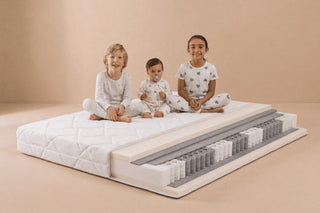
1. Protect the mattress. A waterproof, breathable mattress protector goes directly on the mattress. Ideally, choose a mattress whose cover can be removed and washed – why that makes such a difference with children is explained in Kids' mattress with a washable cover.
2. Double-make the bed. Protector, fitted sheet, second protector, second fitted sheet. At night you only strip the top layer – underneath, the bed is dry straight away.
3. Have a spare set ready. Pyjamas, pants, a dry towel and a duvet or second cover within reach, plus a laundry basket for anything wet.
4. Change calmly. Dim the light, few words: "No problem, let's get you changed." The calmer you are, the faster your child falls asleep again – more on handling night waking in Child wakes up at night.
5. Air in the morning. Fold back the duvet, open the window, let the mattress dry. Wash bedding at 60 °C to get rid of odours and germs.

Myths fact-checked
"The child is just too lazy to get up." Wrong. Your child does not notice the urge to wee while asleep. It has nothing to do with willpower.
"Punishment or scolding will make them dry faster." Wrong – and harmful. Pressure creates shame and stress, and stress can even make bedwetting worse. Rewards for dry nights are also tricky, because your child cannot influence them. Better: praise what they can do, such as going to the toilet before sleep or helping to change the bed.
"Waking your child at night and carrying them to the toilet solves the problem." Only partly. It can save washing, for example before a night at the grandparents'. But your child does not learn to wake up on their own, and everyone's sleep is interrupted.
"Bedwetting is always a sign of emotional problems." No. Most children who wet the bed are psychologically entirely unremarkable. Conversely, long-lasting bedwetting can be a burden – for instance when the first school camp is coming up. That is why your child's distress is an important reason to act.
Treatment: what the paediatrician will discuss with you
If your child is five to six years or older and wants to become dry themselves, there are effective options. Which one fits is something you decide together with your paediatrician. Often the first step is a diary: for a few days you note when and how much your child drinks and wees, and which nights are wet. This often already shows where to start.
One proven option is a bedwetting alarm, as a mat or as alarm pants: it goes off at the first drops, and over several weeks the brain learns to respond to a full bladder. This takes patience and a family willing to join in at night. For certain situations there are also medicines that reduce night-time urine output. Whether and when they are an option, for example before a camp, is for the doctor alone to decide – please do not try anything on your own. In Switzerland, some children's hospitals also offer specialist clinics if the first approach is not enough.
Relapses are normal and not a failure: a child who wets the bed again after two dry weeks and an exciting birthday party is still on the right track.

Get CHF 25 off
Subscribe to our newsletter and get a one-off CHF 25 discount. ✓ 100-night trial ✓ 5-year warranty ✓ Free delivery
Frequently asked questions about bedwetting in children
From what age is bedwetting no longer normal?
Up to around the age of five, night-time wetting is considered a normal variation in development. From five to six years, specialists speak of enuresis if it happens regularly. Even then it is common and very treatable – a good time to raise it with your paediatrician.
Should I stop giving my child drinks in the evening?
No, a strict drinking ban makes no sense. It is better to spread drinks evenly over the day so there is no need to catch up in the evening. Drink normally at dinner, only small sips if thirsty in the last hour before bed, and avoid caffeinated or very sugary drinks.
What does it mean if my child suddenly starts wetting again?
If a child starts wetting again after at least six dry months, this is called secondary bedwetting. Triggers can be changes such as a new sibling or starting kindergarten, but also physical causes such as a urinary tract infection or constipation. That is why sudden renewed wetting should always be checked by a doctor.
Does it help to wake my child at night and take them to the toilet?
In the short term it can save washing, for example before a night away from home. But your child does not learn to respond to a full bladder on their own, and sleep is interrupted. It is therefore not a good long-term solution.
What treatment options are there?
Your paediatrician will discuss this depending on age, cause and how much your child is bothered by it. Often the first step is a drinking and toilet diary. Proven options include a bedwetting alarm such as an alarm mat and, in certain situations, a medicine. Medicines should only be used on a doctor's prescription.
How can I best protect the mattress and bed?
With a waterproof, breathable mattress protector and a mattress with a removable, washable cover. Double-making the bed is practical: protector, fitted sheet, second protector, second fitted sheet. At night only the top layer is stripped, and in the morning the bed is aired well.
This article is for general information only and does not replace advice from a paediatrician. If problems persist, please contact your child's paediatrician.


