







The day went well, the bedtime routine is done, the light goes out – and then comes a quiet “Mummy, there's something there.” Fear of the dark is one of the most common fears in childhood, and it often starts just when parents thought bedtime was finally sorted. In autumn especially, when it is already dark by around 5.30 pm after the clocks change, it noticeably increases in many children. The good news: if your child is afraid of the dark, it is usually a sign of normal development, not a parenting mistake. And you have more influence than it feels like at 8.15 pm at the bedroom door.
The short answer: Fear of the dark usually appears between the ages of two and six, when imagination grows faster than the ability to make sense of it. What helps most is a combination: taking the fear seriously without amplifying it, checking the room from your child's perspective, a dim, warm night light and a reliable bedtime routine. During the day, darkness can be explored through play; at night the rule is calm, brief and reliable. Many children become noticeably more relaxed within a few weeks.
- Fear of the dark often begins at 2–3 years and is most pronounced between 4 and 6.
- Take it seriously rather than arguing it away – “monsters don't exist” rarely reassures.
- A dim night light in warm orange helps many children without disturbing sleep.
- Exploring darkness playfully during the day often works better than anything you do in the evening.
- Seek advice if the fear grows over months or clearly restricts everyday life.
Why fear of the dark is so common in children
Fear of the dark is not a whim; it follows an understandable developmental logic. From around two or three, imagination grows rapidly: children can picture things they cannot see. The ability to reliably separate fantasy from reality matures more slowly and often only becomes dependable at school age. In the dark, the most important check also disappears – sight. The dressing gown on the hook becomes a figure, the creak of the wooden beam a footstep.
On top of that, from kindergarten age children take in more of the world: stories about wolves and robbers, snippets of adult conversations, images from older siblings' shows. In the evening, in the quiet, these impressions resurface.
How widespread this is shows in a frequently cited Dutch survey: roughly three quarters of the 4- to 12-year-olds asked said they felt afraid at night at least occasionally. Most of these fears are temporary. Your job is therefore less to “make the fear go away” than to help your child cope with it – a skill that strengthens them far beyond sleep.
What is typical at which age
The fear changes with development – and so does what helps:
| Age | How the fear shows | What helps most |
|---|---|---|
| 2–3 years | Vague unease, doesn't want to be alone | Closeness, same routine, cuddly toy, few words |
| 3–4 years | Monsters, ghosts, “something under the bed” | Naming the feeling, room check, courage object |
| 4–6 years | Specific figures, noises get interpreted | Torch games, a say in choosing the night light |
| 6–8 years | Real dangers such as fire, burglary, accidents | Factual conversations in the afternoon |
| 9 years and up | Less common, more brooding in the dark | Writing worries down, audiobook with timer |
These figures are guidelines. Some children are never afraid of the dark; others go through a first phase at seven, for example after starting primary school or moving house. Look less at age than at whether the fear gradually changes with your support.
The season plays a part too: in June it stays light in Switzerland until after 9.30 pm, in December it is dark before 5 pm. Many children therefore only consciously experience falling asleep in the dark in autumn – a “new” fear in October is often simply the first dark bedtime in months.

Ways 1–3: building security during the day
1. Take the fear seriously without magnifying it. For your child the feeling is real, even if the monster isn't. “I can see the dark feels scary to you. I'll help you” reassures more than “There's nothing there.” But don't search under the bed for monsters in earnest – that confirms the fear.
2. Explore darkness through play. Torch treasure hunts in a darkened living room, shadow puppets on the wall, a blanket den with a head torch: children who experience darkness with laughter link it to something positive. Small studies on play-based programmes suggest that such gradual experiences can reduce night-time fears in pre-school children. Ten minutes at the weekend is enough to start.
3. Reduce triggers in the evening. Look at the last one to two hours before bed: exciting audio stories, older siblings' series, the news in the background. Even content that seems harmless during the day can linger in the evening – especially after eventful days such as the first month of kindergarten or a busy day at the grandparents'.
Ways 4–6: making the bedroom a safe place
4. Check the room at dusk – from your child's perspective. Lie down briefly in your child's bed in the evening, with the light that stays on at night. What casts shadows? Often it is jackets on hooks, an open wardrobe or a soft toy on the shelf. Close wardrobe doors, move hooks, draw the curtains so that car headlights don't sweep across the ceiling.
5. Choose a night light carefully. Warm, orange to amber light works best, just bright enough to make out shapes. Blue and cool white light tends to be more stimulating. Place it low, for example on a stool, and not directly in your child's line of sight. Let your child help decide – it gives them a sense of control.
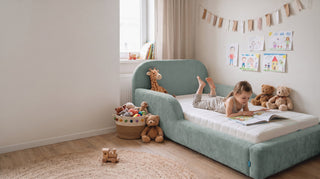
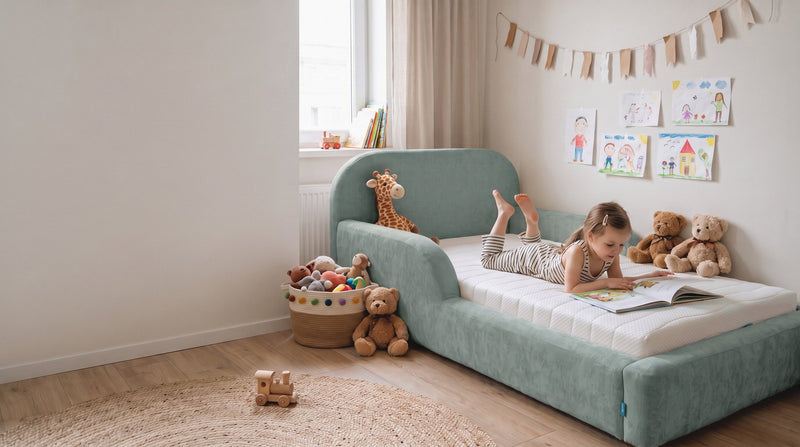
6. Create a sheltered sleeping spot. Many children feel safer when the bed stands with one long side against the wall and they can see the door. A raised, padded surround adds a nest-like feeling. Add a familiar cuddly toy and a room temperature of about 16 to 19 °C. More ideas: Setting up a room for 2- to 5-year-olds.
Ways 7–10: bedtime routine and the night
7. A reliable routine with a courage element. A consistent sequence – brushing teeth, story, dimming the light, goodnight phrase – signals that nothing unexpected will happen here. Add a courage element, such as a “guardian” soft toy or a courage stone under the pillow. Ideas in Bedtime rituals for toddlers.
8. Make your presence audible. A door left ajar, light in the hallway, muffled voices from the kitchen: familiar sounds tell your child you are close by. Older children are sometimes helped by an agreed signal as well, such as a “goodnight knock” on the wall.
9. Announce check-in visits. “I'll come back and look in five minutes” – and then really come. A child who knows someone will come doesn't need to call out. You can lengthen the intervals over the days: 5, 10, 15 minutes.
10. React calmly and briefly at night. If your child comes to you at night, walk them back calmly, stay a few minutes and leave again. How to do this lovingly and consistently is covered in Child comes into the parents' bed at night.

The 2-week plan, step by step
If fear of the dark has shaped bedtime for weeks, a structured approach helps. Plan an extra 10 to 15 minutes in the evening and agree on the same approach as parents beforehand.
Days 1–3 – observe. Note when the fear appears, what triggers it and how long falling asleep takes. Do the room check and choose the night light together.
Days 4–7 – give security. Fixed routine, courage element, announced check-ins every 5 minutes. During the day, a short darkness game two or three times.
Days 8–11 – extend the intervals. Stretch check-ins to 10 minutes, make the hallway light a little dimmer. Praise specifically: “You stayed lying calmly in bed tonight.”
Days 12–14 – consolidate. Check-ins only when needed, the night light stays. In the afternoon, ask what helped your child most.
Setbacks are normal, for example after a cold or a holiday at the grandparents'. Simply restart one stage earlier. If falling asleep is difficult in general, take a look at Child won't fall asleep alone.
Myths fact-checked
“A night light creates dependence.” A dim night light is an aid, not a habit you will later have to break with great effort. Most children give it up on their own once the fear fades, often between six and nine.
“Children need to be confronted with their fear.” Leaving a child to cry alone in a pitch-dark room tends to intensify the fear. What helps is a gradual approach with support: first with the hallway light, then with just the night light, later perhaps with none at all.
“Monster spray solves the problem.” Such rituals give some children a sense of agency, but indirectly confirm that monsters exist. Courage objects that strengthen the child, rather than fighting a danger, often work better.
“My child is just anxious.” Fear of the dark is so widespread that on its own it says nothing about temperament. Often there is simply a lively imagination behind it.
“Exceptions in the parents' bed are always wrong.” On difficult nights they are fine. It only becomes tricky when they turn, unplanned, into a permanent solution that nobody really wants.
When to seek support
In the vast majority of cases, fear of the dark is harmless. A check-up with your paediatrician makes sense if the fear increases rather than decreases over several months, if your child reacts with real panic in the evening or already dreads bedtime in the afternoon, if they sleep clearly too little and are very tired or irritable during the day, if the fear spreads to many other situations or if you suspect a distressing experience. Snoring, pauses in breathing or frequent startled waking should also be looked at by a doctor. Frequent nightmares are a separate topic, covered in Nightmares in children: what really helps. In Switzerland, the parent and child counselling services and your canton's family counselling service are also good, easy-to-reach points of contact. Ideally, bring your notes from the 2-week plan. Asking for help is not admitting you did something wrong – the earlier you get an assessment, the smaller the issue usually stays.

Get CHF 25 off
Subscribe to our newsletter and get a one-time CHF 25 discount. ✓ 100-night trial ✓ 5-year warranty ✓ Free delivery
Frequently asked questions about fear of the dark
At what age are children afraid of the dark?
It often begins at around two or three, when imagination develops strongly. It is usually most pronounced between four and six. In many children it fades noticeably at school age, although individual phases can also occur later.
Which night light is best for children?
A light in a warm orange or amber tone, just bright enough to make out shapes. It should be placed low and not directly in the line of sight. Blue or cool white light is less suitable because it tends to be more stimulating.
Can the night light stay on all night?
Yes, a dim, warm night light can stay on all night if it helps your child – it provides orientation, especially when waking at night. A bright ceiling light or a screen, on the other hand, is not a good solution.
Should I look under the bed for monsters?
Preferably not. Searching in earnest confirms that something could be there. It is better to do a room check together at dusk, explaining shadows and objects, and to offer a courage object that strengthens your child.
How long does it take for the fear to fade?
With a calm, consistent approach, many children become noticeably more relaxed within two to four weeks. The fear can return in phases, however, for example after a move, starting kindergarten or in autumn when it gets dark earlier.
When should I seek medical advice?
If the fear increases over months, your child panics in the evening or dreads bedtime during the day, if they sleep clearly too little, the fear spreads to many situations or a distressing experience preceded it. Snoring or pauses in breathing should also be checked.
This article is for general information only and does not replace advice from a paediatrician. If problems persist, please contact your paediatrician.


