




It is 7.45 p.m. in a flat in Winterthur. Teeth brushed, story read, light off – and twenty minutes later the three-year-old daughter is standing in the doorway again, wide awake. When your child won't fall asleep, it doesn't just cost you the evening; over weeks it drains the energy of the whole family. The good news: sleep-onset problems in toddlers and preschoolers almost always have a recognisable cause that can be fixed with simple adjustments. In this guide you will find the eight most common reasons why a child can't fall asleep, guideline bedtimes by age and a 7-day plan for narrowing down the cause systematically.
The short answer: when a child won't fall asleep, it is usually down to a bedtime that doesn't match their need for sleep, a missing or constantly changing bedtime ritual, too much stimulation in the evening or overtiredness. Less often, separation anxiety, an unsuitable sleep environment or physical complaints are behind it. A well-rested child falls asleep within 10 to 20 minutes; if it regularly takes longer than 30 minutes, it is worth going through the causes one by one.
- 10 to 20 minutes to fall asleep is normal – regularly more than 30 minutes points to a sleep-onset problem.
- The most common reason is a bedtime that is too early: the child simply isn't tired yet.
- A fixed ritual of 15 to 30 minutes that ends in the child's own bed is the single most effective measure.
- Screens off 60 minutes before sleep, room at around 18 °C and dark.
- If problems start suddenly or come with snoring, pain or fever, it is a matter for your paediatrician.
Reasons 1 and 2: the bedtime doesn't match the need for sleep
The most common and most underestimated reason: many children are put to bed too early. A child who has to be in bed at 6.30 p.m. but only gets tired at 7.30 p.m. lies awake for an hour and keeps finding new reasons to get up. The child isn't being "difficult"; they just aren't tired.
The second variant is the opposite: overtiredness. If a child is awake for too long, the body releases stress hormones. They seem hyper or cry over small things – and despite being exhausted, they can't switch off. If you act at the first signs of tiredness (rubbing eyes, yawning, leaning against you, less interest in play), you catch the sleep window. Half an hour later it has often already closed.
The solution is the same in both cases: work backwards from the wake-up time to calculate bedtime, and factor in the nap. There is more on this in our age-by-age guide to sleep needs; the table shows the usual guideline values.
| Age | Sleep need per 24 h | Daytime sleep | Bedtime for a 7 a.m. wake-up |
|---|---|---|---|
| 1–2 years | 11–14 hours | 1–2 hours | approx. 7.00–7.30 p.m. |
| 3–5 years | 10–13 hours | 0–1 hour, often phasing out | approx. 7.00–8.00 p.m. |
| 6–8 years | 9–12 hours | none | approx. 7.30–8.30 p.m. |
If your child falls asleep within 5 minutes, they were probably overtired; if it takes more than 30 minutes, the bedtime is more likely too early. Shift the time in 15-minute steps and observe three to four evenings each time.
Reasons 3 and 4: no ritual – and one screen too many
The bedtime ritual is missing or keeps changing
Toddlers can't read the clock, but they learn sequences at lightning speed. A ritual works like a chain of signals: bath, pyjamas, teeth, two books, song, lights out. If the same order comes every evening, the body starts preparing for sleep at the very first step. If the sequence changes depending on mood, parent or day of the week, that signal is missing. What has proven itself is 15 to 30 minutes that always end in the child's own bed – not on the sofa and not in the parents' bed. You will find an example in our step-by-step bedtime routine from age 2.
Screen time before sleep
The bright, bluish light of tablets, phones and TVs tells the brain "daytime" and slows down the body's own preparation for sleep. Then there is the content: even a harmless cartoon is emotionally exciting for a preschooler. So switch off screens at least 60 minutes before bedtime and replace them with puzzles, drawing, audio stories or tidying up together. Many families find that this step alone noticeably shortens the time it takes to fall asleep.
Reason 5: too much excitement in the evening
An exciting day at daycare, a visit from the grandparents, romping around after dinner, a fight over brushing teeth – all of this keeps the pulse up. Children can't switch modes at the push of a button; adults need a while to wind down after an intense evening too.
So deliberately plan the last hour before sleep to be calm. Dim the lights in the flat, speak more quietly, skip tickling games and races down the hallway. A short chat during the ritual helps to close the day inwardly: "What was nice today? What was rubbish?" Two or three sentences are enough; the point is that the child feels heard and has nothing left to "get off their chest" once the light is out.
Your own tension plays a part too: anyone sitting stressed beside the bed and secretly checking the time passes it on. Leave your phone outside the child's room, take a few deep breaths and accept that the ritual takes as long as it takes. Children can tell exactly whether you are really there or already half-way to the washing-up.

Reason 6: the sleep environment isn't right
Too warm, too bright, too loud – or a bed that doesn't feel safe. The guideline for a child's room is around 18 °C. In flats with underfloor heating or under the roof in summer it is often considerably warmer in the evening; a thermometer next to the bed gives clarity. Air the room briefly before bedtime and choose a light sleeping bag rather than a thick winter duvet.
When it comes to light, darkness counts. In June it is still broad daylight in Switzerland at 8 p.m.; a blackout curtain helps more than any sleep spray. If a night light is needed, choose a dim, warm-white one. The wall colour also influences the mood in the room; you can read which shades are calming in our article on colours in the children's room.
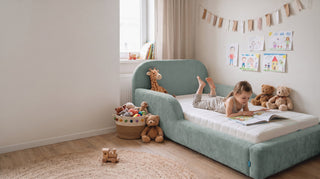
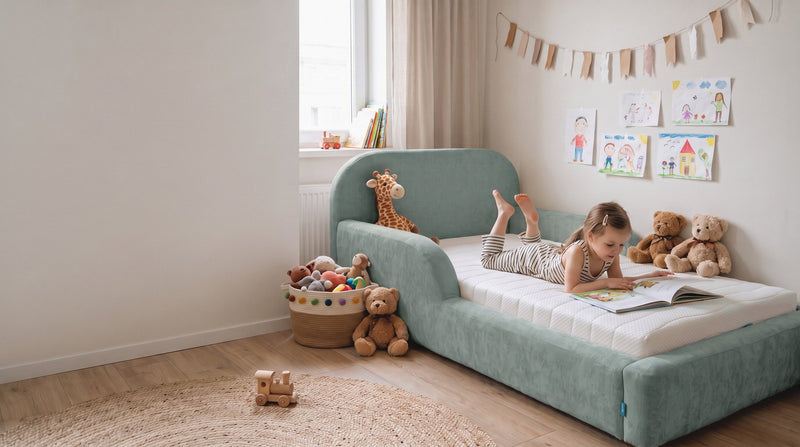
The third point is the bed itself. Many children between two and five have often just moved from a cot into a big bed; a wide, open bed with hard edges can feel unprotected to them. A softly padded rim, a familiar cuddly toy and a blanket to "wrap up" in give back the nest feeling that many children need in order to let go.
Get CHF 25 off
Subscribe to the newsletter and receive a one-time CHF 25 discount. ✓ 100-night trial ✓ 5-year warranty ✓ Free delivery
Reasons 7 and 8: separation anxiety and physical causes
Separation anxiety
Between around 18 months and 3 years, separation anxiety is especially pronounced; in times of upheaval such as starting playgroup, moving house, a new sibling or starting kindergarten it often comes back. The child knows you are leaving the room but isn't yet sure that you will come back. Falling asleep feels like a goodbye. Clarity and reliability help: say goodbye with a fixed sentence and don't come back three times "just to check". If you promise "I'll pop in again in five minutes", then do it. A cuddly toy that keeps watch as a "guardian", or a T-shirt that smells of you, bridges the time until the child falls asleep.
Physical causes
Sometimes the problem isn't about parenting but physical: teething, a blocked nose from a cold, earache, itchy skin from eczema, growing pains in the legs or a full stomach after a late dinner. Toddlers can rarely put this into words; they show it through restlessness, crying or constantly getting up. If sleep-onset problems appear suddenly without anything having changed in the daily routine, think of a physical cause first and talk to your paediatrician if you suspect one.

Myths under the microscope: what doesn't make falling asleep easier
"If I keep the child up for a long time, they'll be more tired in the evening." Wrong; usually the opposite happens. An overtired child is wound up and takes longer to fall asleep. Better: adjust the nap instead of pushing bedtime back. You can read when children are ready to drop the nap in our article on dropping the nap.
"A big plate of pasta makes you sleepy." A full stomach right before sleep is more likely to disturb. Leave about an hour between dinner and bed.
"Try whatever works today." A new method every evening – music today, a drive in the car tomorrow, the parents' bed the day after – is confusing for children. Consistency over at least a week works better than the supposedly perfect technique.
"Leaving them to cry gets children to sleep." We do not recommend leaving children to cry unattended. Gentle, gradual methods in which you stay present and slowly reduce your help are well suited to toddlers and do not strain the relationship.
In practice: the 7-day plan when your child won't fall asleep
Instead of changing everything at once, go through the causes systematically. A notepad beside the bed is enough for bedtime, time of falling asleep and anything unusual.
- Days 1–2: observe. Change nothing, just note: when into bed, when asleep, how long the nap was, what happened beforehand?
- Day 3: cut screens and romping. From 60 minutes before bed there are no more screens and no wild games, but dimmed light instead.
- Day 4: fix the ritual. Set five fixed steps and hang them by the bed as picture cards. The ritual always ends in the child's bed.
- Day 5: check the bedtime. Does the child still need more than 30 minutes despite everything? Move bedtime 15 minutes later. Do they fall asleep in under 5 minutes and seem hyper in the evening? Shorten the nap or put them down 15 minutes earlier.
- Day 6: optimise the room. Set up a thermometer, close the curtain, warm-white night light, check that the bed feels secure.
- Day 7: settle the goodbye. Agree on a fixed goodbye sentence and a reliable "I'll come and check on you again".
After a week you will see in the log which change made the biggest difference. Keep it up and give your child another two weeks until the new routine feels like second nature.
When you should talk to your paediatrician
Most sleep-onset problems resolve within a few weeks with the adjustments described. You should have things checked by a doctor if your child regularly needs longer than 45 minutes to fall asleep for more than four weeks and is noticeably unsettled, tired or irritable during the day. Likewise if sleep-onset problems come with loud snoring, pauses in breathing, mouth breathing or heavy night sweats, because enlarged tonsils or adenoids can be behind them. Persistent pain, itching or a sudden onset without any recognisable trigger also belong in the consulting room.
In Switzerland the first point of contact is your paediatrician; the parent counselling service (Mütter- und Väterberatung) in your municipality also supports families with young children on sleep questions free of charge. For stubborn cases, the children's hospitals have specialised sleep clinics. We expressly advise against sleep medication or dietary supplements for falling asleep without a doctor's prescription. The sleep log from the 7-day plan is the best preparation for such a conversation.

Frequently asked questions about children falling asleep
How long should it take a child to fall asleep?
10 to 20 minutes is considered normal. If a child regularly falls asleep in under 5 minutes, they are probably overtired. If they need more than 30 minutes over a period of weeks, it is worth reviewing bedtime, the ritual and how the evening is organised.
Should I stay with my child until they have fallen asleep?
That is a family decision, not a mistake. If it works for you and your child goes back to sleep at night without you, there is nothing against it. If staying becomes a condition and the child calls for you several times a night, reduce your presence step by step: from the edge of the bed to a chair, then to the door.
Does a night light help with falling asleep?
For children who are afraid of the dark, a dim, warm-white or reddish night light can be calming. You should avoid bright, bluish or white light, because it signals daytime to the body. Position the light so that it doesn't shine in the face.
My child only falls asleep in our bed – what can I do?
Start and end the ritual in the child's room, even if you stay sitting next to the child's bed at first. Explain during the day what is changing and stay consistent for at least two weeks. A secure bed of their own and a personal item of yours make the transition easier.
How long does it take for a new bedtime routine to work?
Most families see first improvements within three to seven days. Allow two to three weeks for the ritual to become established. Setbacks during illness, holidays or teething are normal and no reason to give up.
When do sleep-onset problems become a matter for the paediatrician?
If your child takes longer than 45 minutes to fall asleep for more than four weeks and is tired or irritable during the day, or if snoring, pauses in breathing, pain or fever come on top. In Switzerland, the paediatrician and the parent counselling service are the first points of contact.
This article is for general information only and does not replace paediatric advice. If problems persist, please consult your paediatrician.


