





At three, your child is no longer a baby – and you often notice it first at bedtime. They negotiate for a third story, want to choose their own pyjamas and appear in the doorway twice more after the goodnight kiss. At the same time, sleep itself is changing: the daytime nap gets shorter or disappears, a growing imagination brings the first nightmares, and some children are just moving from the cot to a big bed. When it comes to sleep at age 3, many parents therefore wonder what is still normal and what they can influence. With a reliable rhythm and a clear bedtime routine, the typical stumbling blocks can usually be handled well.
The short answer: according to the American Academy of Sleep Medicine (AASM), children aged 3 to 5 need around 10 to 13 hours of sleep per 24 hours, naps included. Many three-year-olds sleep around 10.5 to 11.5 hours at night and still take a nap, which often disappears between the ages of 3 and 5. Typical issues at this age are bedtime negotiations, night waking, early rising and first nightmares. What helps most: fixed times, a short bedtime routine that is always the same, and a calm sleep environment.
- Sleep need at 3 to 5 years: around 10–13 hours per 24 hours (AASM), naps included.
- The nap often goes between the ages of 3 and 5 – an afternoon quiet time remains worthwhile.
- Bedtime negotiations are a sign of growing independence, not a parenting failure.
- A 20–30-minute bedtime routine in the same order every night provides security.
- Loud snoring, pauses in breathing or marked daytime tiredness should be checked by a paediatrician.
Sleep at age 3: how much does a child need?
The AASM recommends 10 to 13 hours of sleep per 24 hours for children aged 3 to 5. Individual needs vary considerably, though. A child who falls asleep at 7.30 pm and wakes at 6.30 am gets 11 hours of night-time sleep – with a one-hour nap, that makes 12 hours. Another sleeps from 8 pm to 6.45 am without a nap and is still perfectly balanced.
More important than the exact figure is how your child seems during the day. If they are usually in a good mood in the morning, play with concentration and fall asleep within about 15 to 30 minutes in the evening, the amount is generally right. If they take a long time to get going in the morning, fall asleep instantly in the car or regularly become "overtired" in the late afternoon, they are probably short of sleep. You will find an overview for all ages in the article How much sleep does my child need?.
| Daily pattern | Night-time sleep | Daytime sleep | Sample times |
|---|---|---|---|
| With a nap | approx. 10.5–11 h | 45–90 min | Nap 1–2 pm, bed 8 pm, up 6.45 am |
| Transition phase | approx. 11–11.5 h | every 2nd–3rd day | On days without a nap, bed as early as 7 pm |
| Without a nap | approx. 11–12 h | quiet time 30–45 min | Bed 7–7.30 pm, up 6.30–7 am |
What changes in sleep at three
Around the age of three, several developmental steps happen at once, and almost all of them affect sleep. The first is autonomy: your child discovers that they have their own wishes and can assert them. Bedtime is an ideal stage for this, because it happens every evening and parents are usually tired by then.
The second step is imagination. Three-year-olds increasingly play pretend, make up stories and can picture things that do not exist. The ability to reliably tell fantasy from reality, however, develops more slowly. That is why first nightmares and fear of the dark often appear at this age.
The third step concerns everyday life: many children start nursery or go to a childminder at three, some have a regular grandparents' day, and in a year's time kindergarten begins – under HarmoS, from around the age of four in most cantons. New impressions, group rules and separations are also processed at night. So it is easy to explain why a child sleeps more restlessly after an intense day at nursery, and it is usually temporary.
Finally, sleep architecture changes: deep sleep is especially pronounced in the first hours of the night. This is also the phase in which night terrors occur, which are most common between the ages of three and six.

Napping at 3: keep it, shorten it or drop it?
The nap is the big transitional issue for three-year-olds. Many still nap regularly, others only on nursery days or after an outing, and some have already given it up entirely. Studies show that the nap usually goes between the ages of three and five.
Signs your child is ready: they lie awake playing for a long time at midday, they take 45 minutes or longer to fall asleep in the evening despite a suitable bedtime, or they wake noticeably earlier in the morning than before. Signs they still need it: without a nap they become weepy around 4 pm, almost fall asleep at the dinner table or wake more often at night.
In practice, a gradual approach works well. First shorten the nap to 45 to 60 minutes and wake your child by 3 pm at the latest, so the evening does not get too late. If it then goes altogether, replace it with 30 to 45 minutes of quiet time with a picture book or audio story in a darkened room, and bring bedtime forward by 30 to 60 minutes. Read more in Dropping the nap.
Typical sleep problems in three-year-olds
Stalling at bedtime. "One more glass of water", "I need the loo", "Just one more story": at three, this is the rule rather than the exception. Clear limits agreed in advance help – for example two books and a glass of water already on the bedside table.
Taking a long time to fall asleep. If falling asleep regularly takes more than 30 minutes, bedtime is often too early for current needs, the nap too long or too late, or the evening too exciting. Other causes are described in the article Child won't fall asleep.
Night waking. Brief waking between sleep cycles is normal. It becomes difficult when your child needs exactly the same conditions to get back to sleep as when they fell asleep in the evening, such as your presence.
Early waking. If your child regularly wakes before 6 am, morning light, too early a bedtime or overtiredness often play a role. After the clocks change at the end of October, the problem tends to shift by an hour.
Nightmares and night terrors. During a nightmare the child is awake and can be comforted; during a night terror in the first half of the night, they cannot. Night terrors in children explains how to tell them apart.
The bedtime routine for three-year-olds: step by step
A good bedtime routine is short, predictable and the same every evening – whether Mum, Dad or the grandparents are putting your child to bed. For three-year-olds, 20 to 30 minutes has proven effective. An example for a 7.30 pm bedtime:
6.45 pm – Winding down. Screens off, calmer play, dim the lights in the flat. Ideally, screen time ends at least an hour before sleep.
7 pm – Bath or wash, teeth, toilet. Always in the same order. A picture chart with three or four cards helps children who like to have a say.
7.10 pm – Pyjamas and a choice. Offer a small, genuine choice: "The blue pyjamas or the striped ones?" This satisfies the wish for self-determination without derailing the routine.
7.15 pm – Story in bed. Two books or a told story, decided in advance. Then a brief look back at the day: what was nice today?
7.30 pm – Lights out. A fixed closing phrase, a kiss, the cuddly toy. If they get up again, take them back calmly and with few words.
You will find more ideas for fixed rituals in Bedtime rituals for toddlers.
The sleep environment: room, bed and temperature
At night, the child's room should be dark, quiet and rather cool. Room temperatures of around 16 to 20 °C are often recommended; a sleeping bag or light duvet is then quite enough. In summer, blackout curtains help, because in early June it is already light in Switzerland shortly after 5 am.
A light alarm clock can be useful for early risers: it shows with a colour when the day may begin. Most children understand this signal quickly if you support it consistently for a few days.
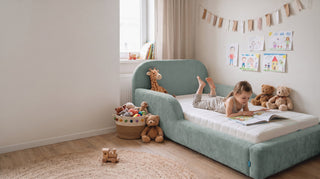
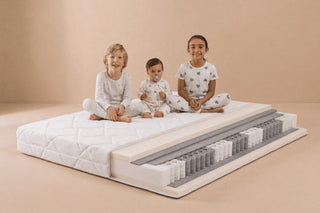
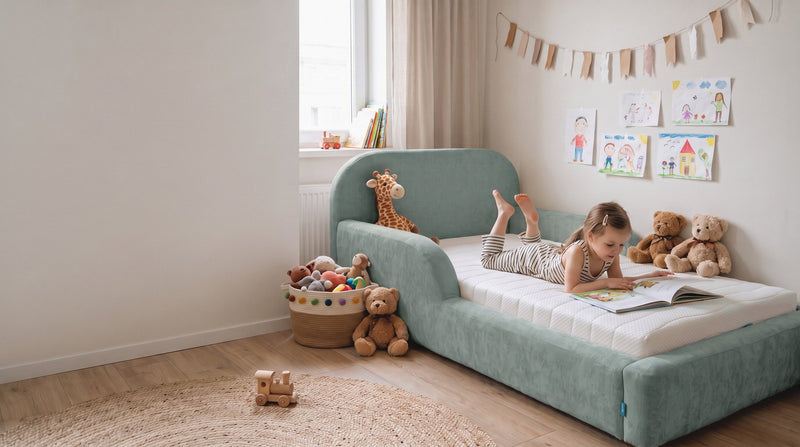
At three, many families also consider the move to a big bed, especially when a younger sibling needs the cot or the child is already climbing over the bars. What matters is a low sleeping height, side protection against falling out and a mattress that gives good support. If possible, do not plan the move at the same time as starting nursery. The article Kids' bed without rails: when is your child ready? helps you recognise the right moment.

Common mistakes and myths fact-checked
Myth: "If they go to bed later, they'll sleep longer in the morning." For most three-year-olds, this is not true. Waking time is strongly determined by light and the body clock. A late evening often ends with an overtired child who is still awake at 6 am.
Myth: "Without a nap, they'll definitely sleep better at night." Sometimes yes, but often only once bedtime has been adjusted. Dropping the nap while leaving the evening unchanged frequently means more tears and more restless nights.
Mistake: renegotiating the rules every evening. If the third story sometimes works, negotiating is always worth it for your child.
Mistake: using bed as a punishment. "If you don't listen, you're going to bed" links the place of sleep with trouble.
Mistake: everything different at the weekend. A difference of 30 to 60 minutes is not a problem. Going to bed two hours later on Saturday, on the other hand, often makes Monday at nursery difficult.
When to seek paediatric advice
Most sleep problems in three-year-olds are temporary and can be handled well with rhythm and routine. It is worth having things checked if your child regularly snores loudly, has pauses in breathing during sleep or sleeps with their mouth open and sweats heavily – this can, for example, be linked to enlarged adenoids or tonsils. Marked daytime tiredness despite enough time asleep, very frequent night-time episodes such as night terrors or sleepwalking, noticeably restless legs in the evening, or sleep problems that put a heavy strain on family life for several weeks also belong in the paediatric practice. In Switzerland, the parent and child counselling service (Mütter- und Väterberatung) is also a good, easily accessible first point of contact. Do not give sleeping aids or supplements on your own initiative.

Get CHF 25 off
Subscribe to our newsletter and get CHF 25 off once. ✓ 100-night trial ✓ 5-year warranty ✓ Free delivery
Frequently asked questions about sleep in 3-year-olds
How many hours should a 3-year-old sleep?
The American Academy of Sleep Medicine recommends 10 to 13 hours of sleep per 24 hours for children aged 3 to 5, naps included. Many three-year-olds sleep around 10.5 to 11.5 hours at night. What matters most is that your child seems balanced and alert during the day.
Does a 3-year-old still need a nap?
Many do, some no longer. The nap often goes between the ages of three and five. If your child lies awake for a long time at midday or hardly falls asleep in the evening any more, they are probably ready. A quiet break of 30 to 45 minutes in the afternoon is still worthwhile.
What time should a 3-year-old go to bed?
In most families, bedtime is between 7 and 8 pm. Count back from the usual waking time: if your child wakes at 6.30 am and no longer naps, a bedtime of around 7 to 7.30 pm fits well.
Why doesn't my 3-year-old want to go to bed?
At three, the wish for self-determination grows, and bedtime is an ideal stage for it. Add to that feelings about separation, a nap that is too long or an exciting evening. A fixed routine with small, genuine choices and clear limits helps most.
Is it normal for my 3-year-old to wake at night?
Brief waking between sleep cycles is normal at any age. Many three-year-olds then call for their parents, especially during periods with lots of new experiences such as starting nursery. Responding briefly, calmly and always in a similar way usually helps. If your child wakes several times a night for weeks, it is worth talking to your paediatrician.
When should we seek medical advice about sleep?
If there is regular loud snoring, pauses in breathing during sleep, marked daytime tiredness despite enough sleep time, very frequent night terrors or sleepwalking, or sleep problems that put a heavy strain on family life for weeks. Do not give sleeping aids or supplements on your own initiative.
This article is for general information only and does not replace advice from a paediatrician. If problems persist, please consult your paediatrician.


