






No sooner is the first birthday party over than many families start asking: from what age does a kids’ bed actually make sense? Many parents are unsure whether they are too early or too late. At the same time, the cot in the old Zurich flat is slowly getting too small, and perhaps a little brother or sister is already on the way. There is no fixed age limit, but there are typical stages and clear signs you can go by. In this guide you will find every stage from the baby year to school age, a table with bed types and mattress sizes, a transition plan and the most common mistakes.
The short answer: Most children move from the cot to their first kids’ bed between about 2 and 3.5 years. Switching earlier than around 18 months is usually not a good idea, because many children do not yet understand that they should stay in bed at night. The right moment depends less on age than on development: if your child climbs out of the cot, bumps into the ends at a height of around 90 cm or becomes dry during the day, the time has often come. A kids’ bed with a 90×200 or 120×200 cm sleeping surface can then grow with your child until school age.
- In the first year, official recommendations say your baby should sleep in their own bed in the parents’ room, on their back and without loose blankets or pillows.
- The cot (usually 60×120 or 70×140 cm) typically fits until about 2 to 3 years.
- The move to a kids’ bed usually happens between about 2 and 3.5 years, rarely before 18 months.
- Important signs: climbing, a height of around 90 cm, toilet training, the wish for a “big” bed or a new sibling.
- A kids’ bed measuring 90×200 or 120×200 cm accompanies your child from kindergarten into the school years.
Kids’ bed from what age? The stages at a glance
A child’s sleeping place changes in several stages, and each has its own requirements. In the baby year, the focus is above all on safe sleep: a separate, firm bed within reach of the parents. This is followed by the cot stage, which in most families lasts until about the second or third birthday. The bars provide a sense of security, and the child learns that the bed is a fixed place for sleeping.
Somewhere between about 2 and 3.5 years, the move to the first kids’ bed comes up. Some children are ready at just over two, while others feel comfortable in their cot until shortly before their fourth birthday. Both are normal. When your child starts kindergarten at around 4, they usually already sleep in a big bed, and daily life becomes more structured: early mornings, fewer or no daytime naps, and a greater need for calm in the evening.
As a schoolchild from about 6 to 7 years, the bed increasingly becomes a personal retreat: for reading, cuddling and listening to audio stories. If you choose a 200 cm long sleeping surface for the first kids’ bed, you will not need to buy anything new at this stage. By the way, you can read how much sleep is typical at which age in the article How much sleep does my child need?.
The baby year: their own bed in the parents’ room
For the first year of life there are clear official recommendations that you should follow. Your baby sleeps on their back, in their own bed in the parents’ room, for example in a cradle, a Moses basket, a bedside crib or directly in the cot. The mattress is firm and fits the frame exactly so that there are no gaps. In the first year, no loose blankets, pillows, bumpers or large soft toys belong in the bed. A well-fitting baby sleeping bag is a proven alternative.
The room temperature should ideally be around 18 °C. A simple room thermometer costing just a few francs helps you keep track. Air the room briefly before bedtime, and dress your baby a little lighter rather than too warmly.
A big kids’ bed is not intended for this stage. Co-sleeping in a family bed is a separate topic that you should discuss with your paediatrician if you are unsure. If you are wondering when the move to a separate room is due, you will find guidance in the article From what age does a child sleep in their own room?.
The cot until about 2–3 years and why an early switch rarely fits
A classic cot usually measures 60×120 or 70×140 cm. Many models are height-adjustable: while the baby is lying down, the slatted base is in the upper position; as soon as they pull themselves up, usually from about 6 to 9 months, it is lowered. For most children, the cot is the right place to sleep until about their second or third birthday.
Why under about 18 months is usually too early
Switching before around 18 months is generally not a good idea. Toddlers at this age usually cannot yet reliably understand that they should stay in bed when they wake up. They get up at night, wander around the flat or wake up restless because the familiar boundary is missing. The bars give many children a sense of security and, as part of the evening routine, help them settle down to sleep. For children under about 18 months, a cot or baby bed therefore remains the right choice.
An early switch is sometimes considered for reasons of space, for example when a younger sibling needs the cot. In that case it is worth looking at an interim solution: a second, second-hand cot from Tutti or Ricardo often costs only about CHF 40 to 120. That way your older child does not have to move too early.

Signs of readiness: is your child ready?
Instead of looking at a specific date, it is worth looking at your child. The following signs suggest that the move to a kids’ bed is coming up soon:
- Climbing: If your child swings a leg over the bars or tries to climb out, the cot becomes a risk. A fall from a height of around 90 cm is considerably more unpleasant than a tumble from a low kids’ bed.
- Height: From about 90 cm, many children bump into the head and foot ends of a 60×120 cm bed and can hardly find a comfortable position.
- Toilet training: If your child becomes dry during the day, they may want to go to the toilet by themselves at night. That is much easier without bars.
- Siblings: When a baby is on the way, many families plan the switch. It is important to schedule it a few weeks before or after the birth so that your older child does not feel pushed aside.
- Their own wish: Some children say clearly that they want a “big bed”, for example because they have seen one at friends’ from nursery.
You will find more details about the signals in the article When is my child ready for a big bed? 6 clear signs.
Get CHF 25 off
Subscribe to our newsletter and get a one-time CHF 25 discount. ✓ 100-night trial ✓ 5-year warranty ✓ Free delivery
Which bed at which age? The overview
The following table shows typical bed types, sleeping surfaces and tips by age.
| Age | Type of bed | Sleeping surface | Tips |
|---|---|---|---|
| 0–6 months | Cradle, Moses basket, bedside crib or cot | approx. 40×90 to 70×140 cm | Parents’ room, back sleeping, sleeping bag, approx. 18 °C |
| 6–12 months | Cot | 60×120 or 70×140 cm | Lower the slatted base as soon as your child pulls up |
| 1–2 years | Cot | 60×120 or 70×140 cm | No switch before approx. 18 months, watch for climbing attempts |
| 2–3.5 years | First kids’ bed, low and with fall protection | 90×200 or 120×200 cm | Typical window for the switch, plan the transition gently |
| 4–6 years (kindergarten) | Kids’ bed | 90×200 or 120×200 cm | Reading lamp, fixed evening routine, room for bedtime stories |
| from 6–7 years (school) | Kids’ or teen bed | 90×200 or 120×200 cm | Create a retreat, check the mattress regularly |
Whether a width of 90 or 120 cm suits you better depends mainly on the room and your habits: if you like reading together in the kids’ bed in the evening, you will appreciate the extra 30 cm. In small rooms, 90×200 cm is often the more practical choice. The article Kids’ bed size: 90 or 120 cm offers a detailed decision guide.

Kindergarten and school age: the bed grows with your child
Starting kindergarten, from about 4 years in most cantons, noticeably changes family life. The alarm goes off earlier, many children drop their daytime nap, and the impressions of the day need to be processed in the evening. A calm, familiar place to sleep helps with this. Many children at this age love a bed that feels like a little nest: with a soft boundary, a reading lamp within reach and room for their favourite cuddly toy.
Studies suggest that regular bedtimes and fixed rituals make it easier for children to fall asleep. A bed in which Mum or Dad can sit comfortably while reading aloud supports such rituals in a very practical way.
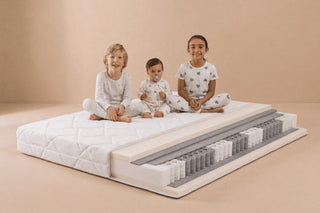
At school age, from about 6 to 7 years, the bed often becomes a personal retreat. This is where a 200 cm long sleeping surface pays off: it usually lasts well into the teenage years. At this stage, pay particular attention to the mattress. It should support the growing body well and be easy to keep hygienic. When switching to a kids’ bed, it is worth thinking about the whole room too; you will find ideas in Furnishing a room for 2- to 5-year-olds.
Transition plan: how to make the switch a success
A good transition does not need weeks of preparation, but it does need a little planning. This sequence has worked well for many families:
- Choose the timing: Plan the switch for a calm period, not at the same time as starting nursery, moving house or toilet training.
- Involve your child: Let your child help choose the bedding or the colour. This builds anticipation.
- Put the bed in the familiar spot: Place the new bed where the cot used to be if possible, and keep the cuddly toy, sleeping bag or duvet.
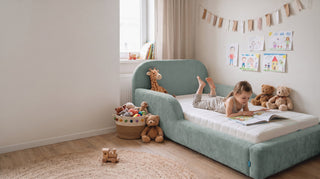
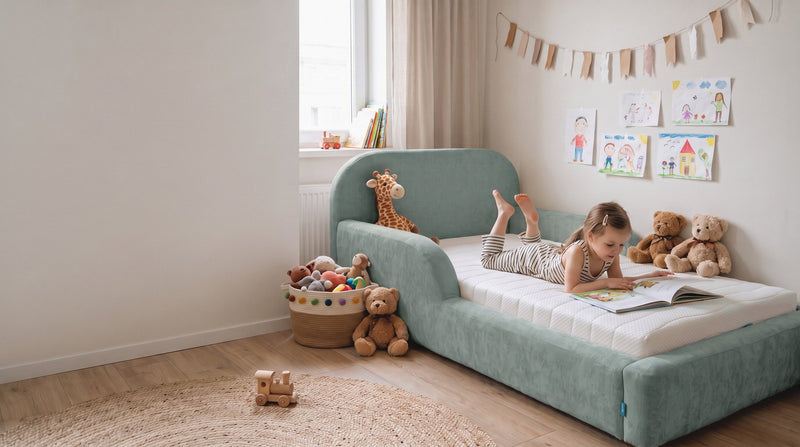
- Plan for fall protection: A low bed with a side boundary provides security, especially in the first few weeks.
- Childproof the room: Now that your child can get up on their own, secure sockets, shelves and windows.
- Keep the rituals: You will find ideas for the evening routine in Sleep rituals for toddlers.
- Be patient: Expect one to three weeks of settling in. If your child gets up at night, take them back to bed calmly and without many words.
You will find more detailed instructions in the guide From cot to kids’ bed in 5 steps.
Common mistakes when switching to a kids’ bed
Many pitfalls are easy to avoid once you know them:
- Switching too early: If you make the change before about 18 months, you often face restless nights because your child does not yet understand that they should stay in bed.
- Too many changes at once: A new bed, a new room, starting nursery and a new sibling all in the same week are too much for many children.
- No fall protection: Toddlers move around a lot at night. A side boundary or a low bed prevents a rude awakening on the floor.
- A bed that is too high: A loft bed or bunk bed is not suitable for toddlers. Many manufacturers state a minimum age for the upper bunk, which you should definitely observe.
- Planning too short-term: A 70×140 cm bed will be too small again after a few years. A 200 cm long sleeping surface saves you a second purchase.
- Seeing setbacks as failure: A few restless nights are normal. Stay calm and consistent instead of switching straight back to the cot.
If your child wakes up frequently after the switch, it is worth looking at other possible causes, for example in the article Child wakes up at night.

Frequently asked questions about which age is right for a kids’ bed
From what age can a child sleep in a kids’ bed?
Most children move from the cot to a kids’ bed between about 2 and 3.5 years. Switching before around 18 months is generally not advisable. What matters are signs such as climbing, height or toilet training.
Is switching at 18 months too early?
A switch at 18 months is possible, but still early for many children. If your child is already climbing out of the cot, a low kids’ bed with fall protection can be the safer solution. Without a specific reason, it is usually worth waiting a little longer.
How long does a cot fit?
A 60×120 or 70×140 cm cot fits most children until about their second or third birthday. From a height of around 90 cm, smaller models often become cramped. At the latest when your child climbs out, a switch is advisable.
What size should the first kids’ bed be?
Sleeping surfaces of 90×200 or 120×200 cm have proven their worth. This way the bed grows with your child until school age and beyond. The wider version offers more space for reading together.
Does a toddler need fall protection in a kids’ bed?
Yes, fall protection is highly recommended in the first few years because toddlers move around a lot at night. A low bed with a side boundary reduces the risk of waking up with a bump on the floor. Many families appreciate solutions without hard edges.
What should I do if my child gets up at night after the switch?
Take your child back to bed calmly and without long conversations, even if this is necessary several times a night at first. A fixed evening routine and plenty of patience help, and settling in usually takes one to three weeks. If sleep problems persist for longer, talk to your paediatrician.
This article is for general information only and does not replace advice from a paediatrician. If problems persist, please contact your child’s paediatrician.


